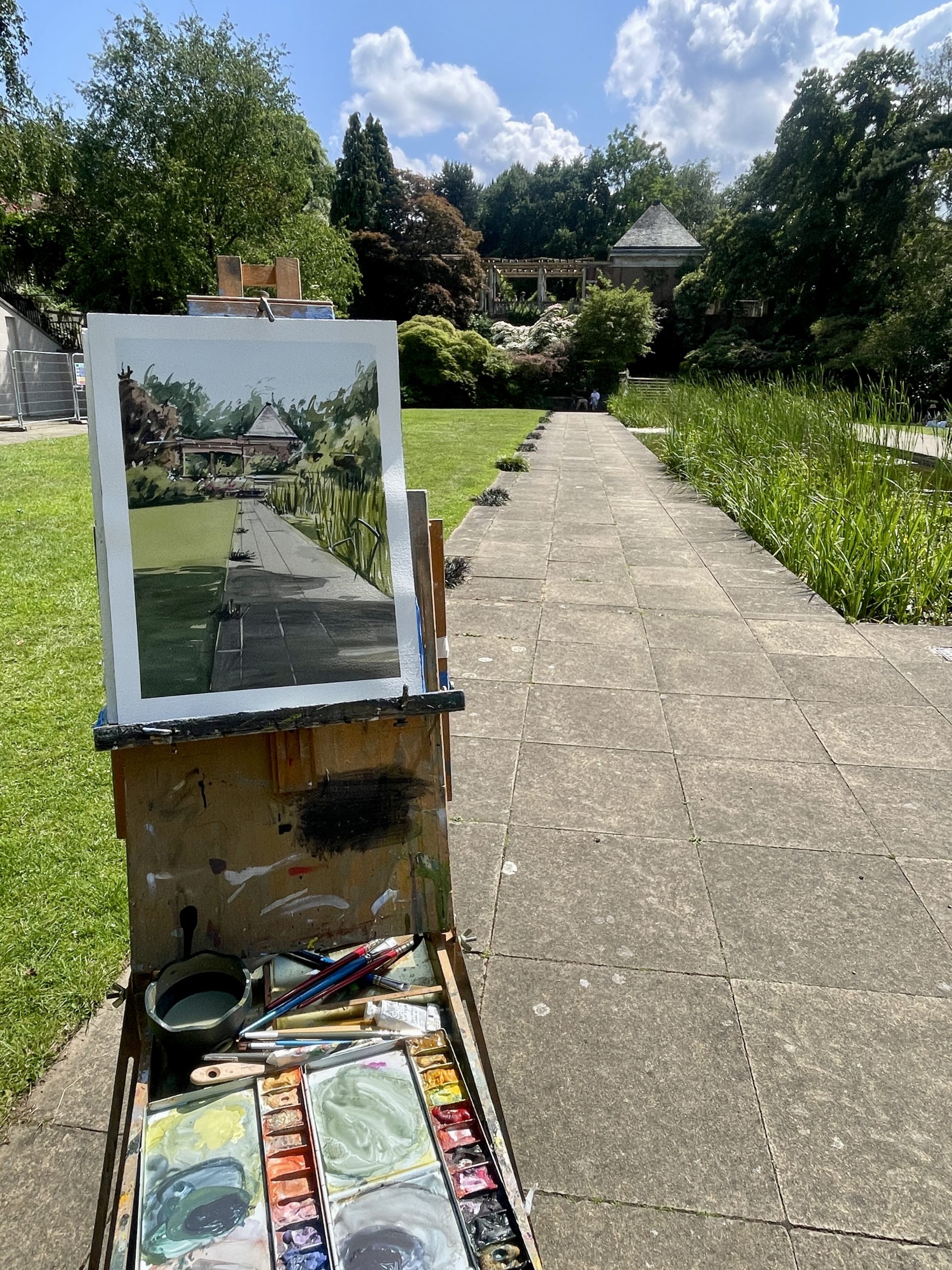
Why Paint Autumn at Hampstead Heath?
Colour range. Green dominates spring and summer. Autumn gives you warmth. Orange, burnt sienna, cadmium red, yellow ochre. Your palette opens up.
Better light. The sun sits lower in autumn. Shadows stretch across paths and ponds. Early morning and late afternoon light is softer, warmer, more forgiving than summer’s harsh midday glare.
Less wind. September and October are calmer than spring. Your easel stays upright. Your water container doesn’t tip over. You paint instead of fighting the weather.
Fewer tourists. Summer crowds thin out. You set up, work, and nobody interrupts. Hampstead Heath in autumn is a working space, not a picnic ground.
Constable painted autumn here. So did Turner. The tradition matters. You’re continuing something that’s been happening for 200 years.
Best Locations for Autumn Painting at Hampstead Heath
1. Parliament Hill Fields
Open terrain. Wide sky. Trees on the edges turning orange and red.
Best time: Early morning (7:00–9:30) when mist clings to the grass and the light is gold. Late afternoon (15:30–sunset) for warm tones and long shadows.
What to paint: The treeline against the sky. Autumn leaves scattered on grass. Silhouettes of people walking dogs.
Autumn advantage: The trees frame the view without blocking it. You get colour without clutter.
Challenge: Wind picks up in open fields. Secure your easel or work fast.
2. Kenwood House Woodlands
Dense trees. Thick canopy. Dappled light filtering through autumn leaves.
Best time: Midday (11:00–14:00) when sunlight breaks through the trees and hits patches of ground. The contrast is sharp.
What to paint: Tree trunks with fallen leaves at the base. Light breaking through branches. The path winding through the woods.
Autumn advantage: The colour intensity is concentrated. Reds, oranges, yellows packed into a small area. You don’t need to simplify much.
Challenge: Light shifts fast under trees. Commit to one lighting condition and stick with it.
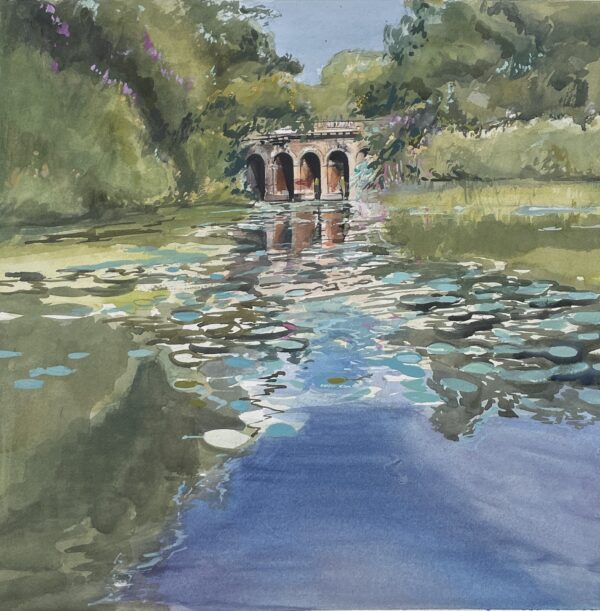
3. Viaduct Bridge in Autumn
The arches stay the same. The trees around it turn gold and orange.
Best time: Late afternoon (16:00–sunset) when warm light hits the bridge and the surrounding foliage glows.
What to paint: The bridge framed by autumn trees. Reflections in the water below with leaves floating on the surface.
Autumn advantage: The structure gives you composition. The autumn colours give you warmth. You don’t have to choose between the two.
Challenge: Falling leaves disrupt water reflections. Work with it or wait for stillness.
4. Mixed Bathing Pond Edges
Wild. Overgrown. Trees leaning over dark water.
Best time: Early morning (6:30–9:00) before swimmers arrive and the water is still.
What to paint: Overhanging branches with autumn leaves. Reflections of orange and red in dark water. The natural chaos of falling leaves.
Autumn advantage: The wildness works better in autumn. Spring and summer look messy. Autumn looks intentional.
Challenge: Limited access depending on the day. Check before you go.
5. Sandy Heath Path
Less known. Quieter. Trees close together, path cutting through.
Best time: Morning (8:00–10:00) or late afternoon (15:00–17:00). Avoid midday when the light is flat.
What to paint: The path disappearing into autumn trees. Fallen leaves covering the ground. The sense of depth.
Autumn advantage: The path gives you perspective. The autumn colours give you warmth. Easy composition, strong result.
Challenge: The path gets muddy after rain. Wear boots.
Techniques for Capturing Autumn Colours in Watercolour
Work wet-on-wet for foliage. Drop burnt sienna, cadmium orange, and yellow ochre into wet paper. Let them blend naturally. Autumn leaves don’t have hard edges.
Use dry brush for texture. Drag a dry brush with burnt umber across rough paper for tree bark and fallen leaves. The texture reads as detail without overworking.
Layer glazes for depth. Start light. Add layers of transparent colour to build richness. Autumn colours aren’t flat. They have depth.
Leave white space. Not everything needs colour. White paper reads as light breaking through leaves or mist on the ground.
Mix your oranges. Don’t rely on one tube of orange. Mix cadmium red with yellow ochre. Mix burnt sienna with cadmium yellow. Each mix gives you a different autumn tone.
Keep your palette limited. Six to eight colours maximum. Burnt sienna, yellow ochre, cadmium red, ultramarine blue, burnt umber, cadmium yellow. You don’t need more.
What You Need (Materials for Autumn Painting)
For watercolour:
- Portable easel or board
- Watercolour block (cold press, 300gsm minimum)
- Travel palette with autumn colours: burnt sienna, yellow ochre, cadmium red, cadmium orange, burnt umber, ultramarine blue
- Water container (collapsible works)
- Brushes (round #8, #12, flat ½ inch)
- Paper towel or cloth
- Spray bottle (for keeping paper damp longer)
Extras for autumn:
- Jacket (mornings are cold)
- Thermos with tea or coffee
- Gloves (fingerless work best)
- Hat (sun still matters)
- Bin bag (leave no trace)
Tips for Painting Autumn Outdoors
Start with the warmest colours first. Yellows and oranges fade fast in fading light. Get them down early.
Work fast. Autumn light shifts faster than summer light. You have 30–40 minutes of consistent light maximum.
Simplify the foliage. You can’t paint every leaf. Suggest masses of colour. Let the viewer’s eye fill in the rest.
Use the grey sky. Autumn skies are often overcast. Don’t fight it. Grey sky makes warm colours pop harder.
Check the weather. Rain ruins watercolour. Wind knocks over easels. Autumn weather changes fast. Check the forecast before you leave.
Go early or late. Midday light is still harsh in autumn. Early morning (7:00–9:30) or late afternoon (15:30–sunset) gives you the best light and the warmest colours.
Embrace the cold. Autumn painting means cold hands. Fingerless gloves help. Movement helps. The cold keeps you sharp.
Mistakes to Avoid
Overworking the colours. Autumn watercolours should feel fresh. If you overwork them, they turn muddy. Two to three layers maximum.
Ignoring the temperature. Your hands get cold. Your water gets cold. Cold water slows drying time. Plan accordingly.
Painting everything. Focus on light and colour. The rest can be suggested. Autumn gives you so much colour that you don’t need detail.
Forgetting water (for yourself). You’ll be out there for hours. Dehydration kills focus. Bring water and snacks.
Chasing the light. The light will shift. Commit to morning light or afternoon light. Don’t try to paint both in one session.
Want to Paint with Me?
I run plein air painting workshops at Hampstead Heath throughout the year. Small groups (8–10 people), live demonstrations, personal critique while you paint.
Next workshop dates are announced to my mailing list first. Priority access, early bird pricing, and behind-the-scenes updates.