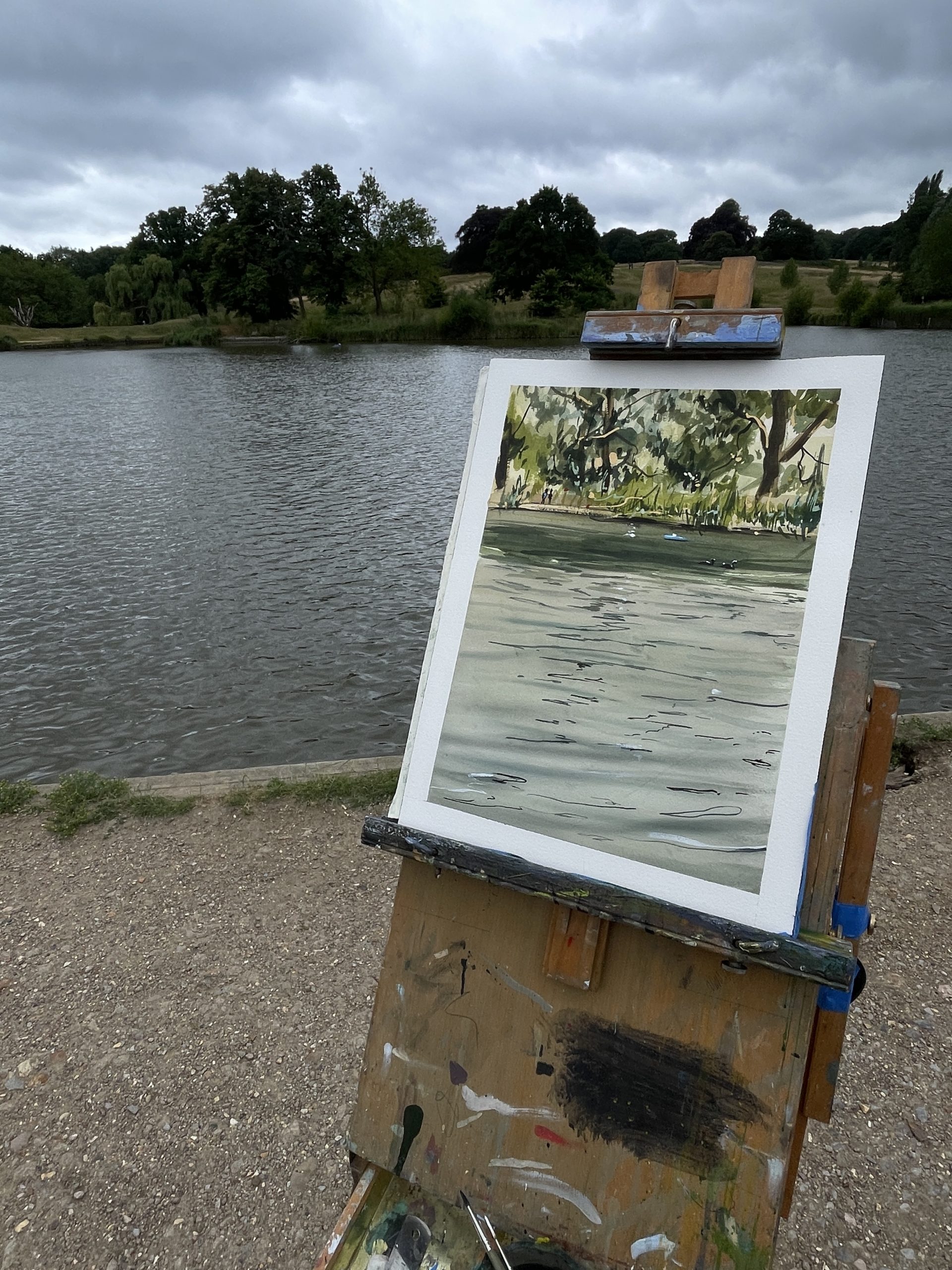
Why Paint Summer at Hampstead Heath?
Intense light. Summer sun is direct. Midday light is brutal, but early morning and late afternoon give you clarity you don’t get in other seasons. Shadows are sharp. Colours are saturated.
Long days. You have more painting time. Sunrise is at 5:00. Sunset isn’t until 21:00. You can paint early, rest midday, paint again in the evening.
Vibrant greens. Summer green is alive. Not the pale green of spring or the faded green of autumn. Rich, saturated, almost overwhelming. Your palette has to handle it.
Strong contrast. Light areas are bright. Shadow areas are dark. No soft transitions. Summer doesn’t give you subtle gradients. You either commit to the contrast or you lose the painting.
Empty early mornings. Most people sleep in during summer. If you show up at 6:00 or 7:00, you have the place to yourself. The light is gold, the air is still, and you work undisturbed.
Best Locations for Summer Painting at Hampstead Heath
1. Kenwood House at Dawn
Open lawns. Long shadows. Architecture in the distance.
Best time: 6:00–8:00. The sun is low, the light is warm, and shadows stretch across the grass. By 9:00, the light is already too harsh.
What to paint: The house from a distance with morning shadows across the lawn. Trees backlit by early sun. The sense of space.
Summer advantage: The grass is bright green. The shadows are deep blue-violet. The contrast writes the painting for you.
Challenge: You need to be there early. By 8:30, tourists arrive and the light shifts to midday harshness.
2. Parliament Hill Ponds in Evening Light
Still water. Sky reflections. Trees silhouetted against warm light.
Best time: 18:00–20:30. The sun is low, the light is golden, and the water reflects everything.
What to paint: The pond with the sky mirrored in the water. Trees as dark shapes against warm light. Minimal detail, maximum colour.
Summer advantage: The evening light lasts for hours. You have time to work, adjust, refine.
Challenge: Swimmers. The pond is active in summer. Paint from a distance or wait for stillness between groups.
3. Sandy Heath Woodland Path
Dappled light. Dense green. Filtered sun breaking through trees.
Best time: 10:00–11:00 or 16:00–17:00. Midday sun filters through leaves and creates spots of light on the path.
What to paint: Light breaking through dense foliage. The path disappearing into green. Contrast between bright spots and deep shadow.
Summer advantage: The green is intense. Light and shadow are extreme. The scene paints itself if you simplify.
Challenge: The light moves fast under trees. Work quickly or commit to one pattern of light and shadow.
4. Viaduct Bridge Midday
Stone arches. Strong shadows. Water below reflecting bright sky.
Best time: 12:00–14:00. Yes, midday. The harsh light works here because the structure creates its own shadows.
What to paint: The arches with deep shadows inside. Bright stone lit by direct sun. Water reflections below.
Summer advantage: The contrast is built into the structure. You don’t need to create it.
Challenge: Harsh light means no room for error. Your values need to be accurate or the painting falls apart.
5. Mixed Bathing Pond Early Morning
Wild edges. Overhanging trees. Dark water reflecting green.
Best time: 6:30–8:00 before swimmers arrive and the water is still.
What to paint: Overhanging branches with bright green leaves. Dark water with reflections. The natural disorder of summer growth.
Summer advantage: The green is overwhelming in the best way. You get to push saturation.
Challenge: Access is limited during peak swimming hours. Go early or don’t go at all.
Techniques for Mastering Bright Summer Light in Watercolour
Preserve your whites. Summer light means bright highlights. Don’t touch them with paint. White paper reads as sunlight. Once you lose it, you can’t get it back.
Use strong darks. Summer isn’t subtle. Your shadows need to be bold. Don’t dilute your darks. Mix ultramarine blue with burnt umber for deep, transparent shadows.
Mix your greens. Don’t rely on tube green. Mix cadmium yellow with ultramarine blue for cool greens. Mix cadmium yellow with burnt sienna for warm greens. Summer green has range.
Work wet-on-dry for sharp edges. Summer light creates hard-edged shadows. Let your washes dry completely before adding the next layer.
Squint constantly. Bright light tricks your eye. Squint to see the true values. If you paint what you think you see, your painting will be too light.
Keep your palette limited. Six to eight colours maximum. Cadmium yellow, burnt sienna, ultramarine blue, alizarin crimson, burnt umber, Prussian blue. You don’t need more.
Paint fast. Summer light shifts quickly. Cloud cover changes everything. You have 30–45 minutes of consistent light. Use it.
What You Need (Materials for Summer Painting)
For watercolour:
- Portable easel or board
- Watercolour block (cold press, 300gsm minimum)
- Travel palette with summer colours: cadmium yellow, burnt sienna, ultramarine blue, alizarin crimson, burnt umber, Prussian blue
- Water container (collapsible works)
- Brushes (round #8, #12, flat ½ inch)
- Paper towel or cloth
- Spray bottle (for keeping paper damp)
Extras for summer:
- Sun hat (essential)
- Sunscreen (you’ll be out for hours)
- Sunglasses (for between paintings, not while painting)
- Water bottle (dehydration kills focus)
- Snacks (energy drops fast in heat)
- Bin bag (leave no trace)
Tips for Painting Summer Outdoors
Go early or late. Midday summer light is harsh and flat unless you’re painting architecture. Early morning (6:00–9:00) or late evening (18:00–20:30) gives you warm, directional light.
Work in the shade. Find a shaded spot to set up. Direct sun on your paper washes out colours and makes it impossible to judge values.
Start with the lightest values. Summer paintings build from light to dark. Establish your lightest washes first, then add darks.
Don’t overwork. Summer watercolours should feel fresh and immediate. Two to three layers maximum. More than that and you lose the brightness.
Check the weather. Summer storms come fast. Watch the sky. If clouds are building, finish what you’re working on or pack up.
Hydrate constantly. You’ll be out in the sun for hours. Drink water before you feel thirsty. Dehydration kills concentration.
Embrace the heat. Summer painting means sweat and discomfort. It’s part of the process. The results are worth it.
Mistakes to Avoid
Painting too light. Summer tricks your eye into painting everything lighter than it is. Squint. Your darks need to be darker than you think.
Using too much water. Summer heat means fast drying. Don’t over-dilute your paint or your colours will be weak.
Ignoring your whites. Once you lose your whites, you lose the sense of bright sunlight. Protect them.
Forgetting sun protection. You’ll be out for hours. Sunburn and heatstroke ruin painting sessions. Hat, sunscreen, water.
Chasing changing light. Summer light shifts fast. Commit to one lighting condition and finish the painting. Don’t try to adjust as the light changes.
Want to Paint with Me?
I run plein air painting workshops at Hampstead Heath throughout the year. Small groups (8–10 people), live demonstrations, personal critique while you paint.
Next workshop dates are announced to my mailing list first. Priority access, early bird pricing, and behind-the-scenes updates.
Final Thoughts
Summer at Hampstead Heath isn’t easy. The light is harsh, the conditions are challenging, and you have to work fast.
But that’s exactly why it’s worth painting.
Summer forces you to make bold decisions. Strong darks. Bright lights. No hesitation. The light doesn’t wait, and neither should you.
Studio work has its place. But nothing replaces the clarity you get from painting outdoors in summer. The light doesn’t lie. The heat doesn’t soften the challenge. You either capture it or you don’t.
That’s what makes it worth it.
Questions? Reply to any email. I read everything.
José